Minority Influence: Resisting Group Pressure
The research that we have discussed to this point involves conformity in which the opinions and behaviors of individuals become more similar to the opinions and behaviors of the majority of the people in the group—majority influence. But we do not always blindly conform to the beliefs of the majority. Although more unusual, there are nevertheless cases in which a smaller number of individuals are able to influence the opinions or behaviors of the group—this is minority influence. [Production: Please bold font in OER]
It is a good thing that minorities can be influential; otherwise, the world would be pretty boring. When we look back on history we find that it is the unusual, divergent, innovative minority groups or individuals, who—although frequently ridiculed at the time for their unusual ideas—end up being respected for producing positive changes. The work of scientists, religious leaders, philosophers, writers, musicians, and artists who go against group norms by expressing new and unusual ideas frequently is not liked at first. Galileo and Copernicus were scientists who did not conform to the opinions and behaviors of those around them. In the end, their innovative ideas changed the thinking of the masses. These novel thinkers may be punished—in some cases even killed—for their beliefs. In the end, however, if the ideas are interesting and important, the majority may conform to these new ideas, producing social change. In short, although conformity to majority opinions is essential to provide a smoothly working society, if individuals only conformed to others there would be few new ideas and little social change.
The French social psychologist Serge Moscovici was particularly interested in the situations under which minority influence might occur. In fact, he argued that all members of all groups are able, at least in some degree, to influence others, regardless of whether they are in the majority or the minority. To test whether minority group members could indeed produce influence, he and his colleagues (Moscovici, Lage, & Naffrechoux, 1969) created the opposite of Asch’s line perception study, such that there was now a minority of confederates in the group (two) and a majority of experimental participants (four). All six individuals viewed a series of slides depicting colors, supposedly as a study of color perception, and as in Asch’s research, each voiced out loud an opinion about the color of the slide.
Although the color of the slides varied in brightness, they were all clearly blue. Moreover, demonstrating that the slides were unambiguous, just as the line judgments of Asch had been, participants who were asked to make their judgments alone called the slides a different color than blue less than 1% of the time. (When it happened, they called the slides green.)
In the experiment, the two confederates had been instructed to give one of two patterns of answers that were different from the normal responses. In the consistent-minority condition, the two confederates gave the unusual response (green) on every trial. In the inconsistent-minority condition the confederates called the slides green on two-thirds of their responses and called them blue on the other third.
The minority of two was able to change the beliefs of the majority of four, but only when they were unanimous in their judgments. As shown in Figure 6.5, “The Power of Consistent Minorities,” Moscovici found that the presence of a minority who gave consistently unusual responses influenced the judgments made by the experimental participants. When the minority was consistent, 32% of the majority group participants said green at least once and 18% of the responses of the majority group were green. However, the inconsistent minority had virtually no influence on the judgments of the majority.
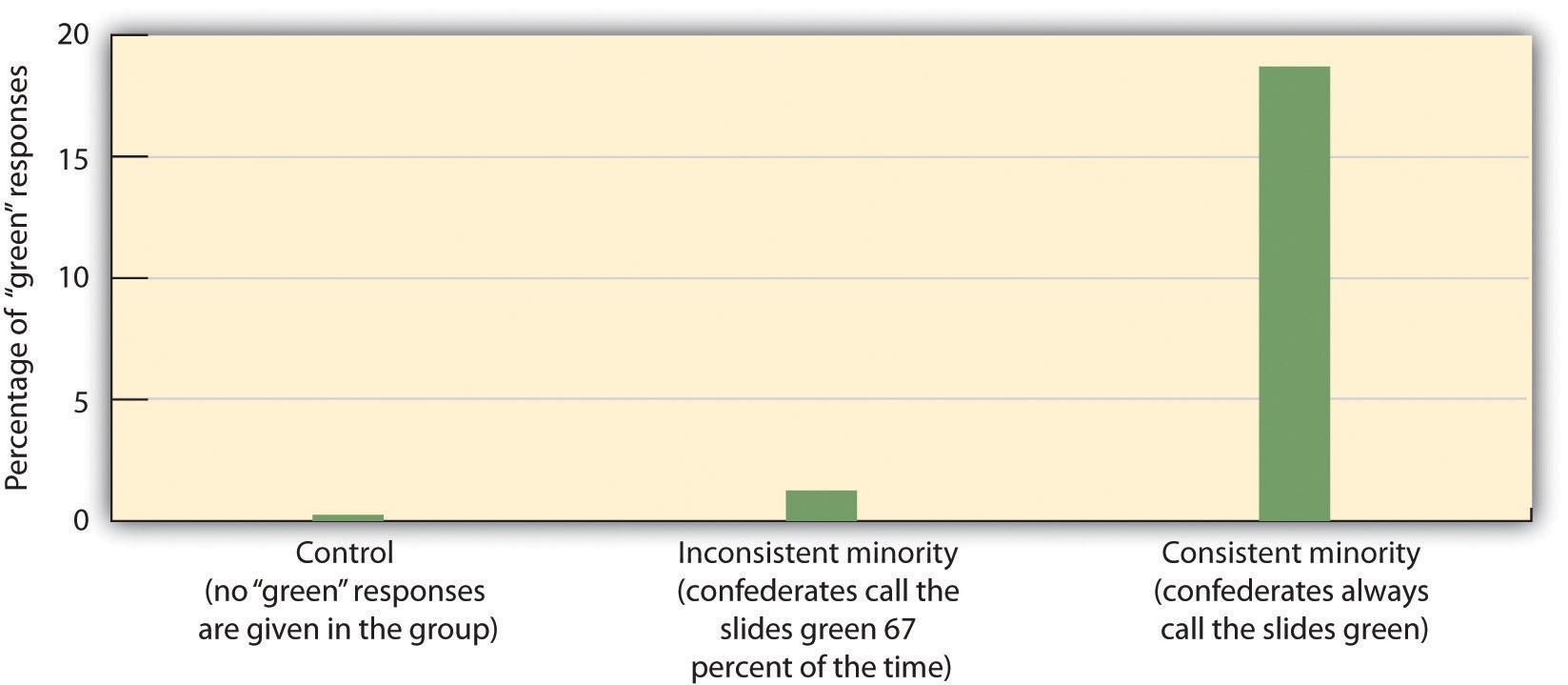
Figure 6.5 The Power of Consistent Minorities
In the studies of minority influence by Serge Moscovici, only a consistent minority (in which each individual gave the same incorrect response) was able to produce conformity in the majority participants. Data are from Moscovici, Lage, and Naffrechoux (1969).
On the basis of this research, Moscovici argued that minorities could have influence over majorities, provided they gave consistent, unanimous responses. Subsequent research has found that minorities are most effective when they express consistent opinions over time and with each other, when they show that they are invested in their position by making significant personal and material sacrifices, and when they seem to be acting out of principle rather than from ulterior motives (Hogg, 2010). Although they may want to adopt a relatively open-minded and reasonable negotiating style on issues that are less critical to the attitudes they are trying to change, successful minorities must be absolutely consistent with their core arguments (Mugny & Papastamou, 1981).
When minorities are successful at producing influence, they are able to produce strong and lasting attitude change—true private acceptance—rather than simply public compliance. People conform to minorities because they think that they are right, and not because they think it is socially acceptable. Minorities have another, potentially even more important, outcome on the opinions of majority group members—the presence of minority groups can lead majorities to engage in fuller, as well as more divergent, innovative and creative thinking about the topics being discussed (Martin & Hewstone, 2003; Martin, Martin, Smith, & Hewstone, 2007).
Nemeth and Kwan (1987) had participants work in groups of four on a creativity task in which they were presented with letter strings such as tdogto and asked to indicate which word came to their mind first as they looked at the letters. The judgments were made privately, which allowed the experimenters to provide false feedback about the responses of the other group members. All participants indicated the most obvious word (in this case, dog) as their response on each of the initial trials. However, the participants were told (according to experimental condition) either that three of the other group members had also reported seeing dog and that one had reported seeing god or that three out of the four had reported seeing god whereas only one had reported dog. Participants then completed other similar word strings on their own, and their responses were studied.
Results showed that when the participants thought that the unusual response (for instance, god rather than dog) was given by a minority of one individual in the group rather than by a majority of three individuals, they subsequently answered more of the new word strings using novel solutions, such as finding words made backwards or using a random order of the letters. On the other hand, the individuals who thought that the majority of the group had given the novel response did not develop more creative ideas. Evidently, when the participants thought that the novel response came from a group minority (one person), they thought about the responses more carefully, in comparison with the same behaviors performed by majority group members, and this led them to adopt new and creative ways to think about the problems. This result, along with other research showing similar findings, suggests that messages that come from minority groups lead us to think more fully about the decision, which can produce innovative, creative thinking in majority group members (Crano & Chen, 1998).
In summary, we can conclude that minority influence, although not as likely as majority influence, does sometimes occur. The few are able to influence the many when they are consistent and confident in their judgments but are less able to have influence when they are inconsistent or act in a less confident manner. Furthermore, although minority influence is difficult to achieve, if it does occur it is powerful. When majorities are influenced by minorities they really change their beliefs—the outcome is deeper thinking about the message, private acceptance of the message, and in some cases even more creative thinking.
Situational Determinants of Conformity
The studies of Asch, Sherif, and Moscovici demonstrate the extent to which individuals—both majorities and minorities—can create conformity in others. Furthermore, these studies provide information about the characteristics of the social situation that are important in determining the extent to which we conform to others. Let’s consider some of those variables.
The Size of the Majority
As the number of people in the majority increases relative to the number of persons in the minority, pressure on the minority to conform also increases (Latané, 1981; Mullen, 1983). Asch conducted replications of his original line-judging study in which he varied the number of confederates (the majority subgroup members) who gave initial incorrect responses from one to 16 people, while holding the number in the minority subgroup constant at one (the single research participant). You may not be surprised to hear the results of this research: when the size of the majorities got bigger, the lone participant was more likely to give the incorrect answer.
Increases in the size of the majority increase conformity regardless of whether the conformity is informational or normative. In terms of informational conformity, if more people express an opinion, their opinions seem more valid. Thus bigger majorities should result in more informational conformity. But larger majorities will also produce more normative conformity because being different will be harder when the majority is bigger. As the majority gets bigger, the individual giving the different opinion becomes more aware of being different, and this produces a greater need to conform to the prevailing norm.
Although increasing the size of the majority does increase conformity, this is only true up to a point. The increase in the amount of conformity that is produced by adding new members to the majority group (known as the social impact [Production: Please bold font in OER] of each group member) is greater for initial majority members than it is for later members (Latané, 1981). This pattern is shown in Figure 6.6 , “Social Impact,” which presents data from a well-known experiment by Stanley Milgram and his colleagues (Milgram, Bickman, & Berkowitz, 1969) that studied how people are influenced by the behavior of others on the streets of New York City.
Milgram had confederates gather in groups on 42nd Street in New York City, in front of the Graduate Center of the City University of New York, each looking up at a window on the sixth floor of the building. The confederates were formed into groups ranging from one to 15 people. A video camera in a room on the sixth floor above recorded the behavior of 1,424 pedestrians who passed along the sidewalk next to the groups.
As you can see in Figure 6.6, “Social Impact,” larger groups of confederates increased the number of people who also stopped and looked up, but the influence of each additional confederate was generally weaker as size increased. Groups of three confederates produced more conformity than did a single person, and groups of five produced more conformity than groups of three. But after the group reached about six people, it didn’t really matter very much. Just as turning on the first light in an initially dark room makes more difference in the brightness of the room than turning on the second, third, and fourth lights does, adding more people to the majority tends to produce diminishing returns—less additional effect on conformity.
Figure 6.6 Social Impact
One reason that the impact of new group members decreases so rapidly is because as the number in the group increases, the individuals in the majority are soon seen more as a group rather than as separate individuals. When there are only a couple of individuals expressing opinions, each person is likely to be seen as an individual, holding his or her own unique opinions, and each new individual adds to the impact. As a result, two people are more influential than one, and three more influential than two. However, as the number of individuals grows, and particularly when those individuals are perceived as being able to communicate with each other, the individuals are more likely to be seen as a group rather than as individuals. At this point, adding new members does not change the perception; regardless of whether there are four, five, six, or more members, the group is still just a group. As a result, the expressed opinions or behaviors of the group members no longer seem to reflect their own characteristics as much as they do that of the group as a whole, and thus increasing the number of group members is less effective in increasing influence (Wilder, 1977).
Group size is an important variable that influences a wide variety of behaviors of the individuals in groups. People leave proportionally smaller tips in restaurants as the number in their party increases, and people are less likely to help as the number of bystanders to an incident increases (Latané, 1981). The number of group members also has an important influence on group performance: as the size of a working group gets larger, the contributions of each individual member to the group effort become smaller. In each case, the influence of group size on behavior is found to be similar to that shown in Figure 6.6, “Social Impact.”
The Unanimity of the Majority
Although the number of people in the group is an important determinant of conformity, it cannot be the only thing—if it were, minority influence would be impossible. It turns out that the consistency or unanimity of the group members is even more important. In Asch’s study, as an example, conformity occurred not so much because many confederates gave a wrong answer but rather because each of the confederates gave the same wrong answer. In one follow-up study that he conducted, Asch increased the number of confederates to 16 but had just one of those confederates give the correct answer. He found that in this case, even though there were 15 incorrect and only one correct answer given by the confederates, conformity was nevertheless sharply reduced—to only about 5% of the participants’ responses. And you will recall that in the minority influence research of Moscovici, the same thing occurred; conformity was observed only when the minority group members were completely consistent in their expressed opinions.
Although you might not be surprised to hear that conformity decreases when one of the group members gives the right answer, you may be more surprised to hear that conformity is reduced even when the dissenting confederate gives a different wrong answer. For example, conformity is reduced dramatically in Asch’s line-judging situation, such that virtually all participants give the correct answer (assume it is Line 3 in this case) even when the majority of the confederates have indicated that Line 2 is the correct answer and a single confederate indicates that Line 1 is correct. In short, conformity is reduced when there is any inconsistency among the members of the majority group—even when one member of the majority gives an answer that is even more incorrect than that given by the other majority group members (Allen & Levine, 1968).
Why should unanimity be such an important determinant of conformity? For one, when there is complete agreement among the majority members, the individual who is the target of influence stands completely alone and must be the first to break ranks by giving a different opinion. Being the only person who is different is potentially embarrassing, and people who wish to make a good impression on, or be liked by, others may naturally want to avoid this. If you can convince your friend to wear blue jeans rather than a coat and tie to a wedding, then you’re naturally going to feel a lot less conspicuous when you wear jeans too.
Second, when there is complete agreement—once again, remember the consistent minority in the studies by Moscovici—the participant may become less sure of his or her own perceptions. Because everyone else is holding the exact same opinion, it seems that they must be correctly responding to the external reality. When such doubt occurs, the individual may be likely to conform due to informational social influence. Finally, when one or more of the other group members gives a different answer than the rest of the group (so that the unanimity of the majority group is broken), that person is no longer part of the group that is doing the influencing and becomes (along with the participant) part of the group being influenced. You can see that another way of describing the effect of unanimity is to say that as soon as the individual has someone who agrees with him or her that the others may not be correct (a supporter or ally), then the pressure to conform is reduced. Having one or more supporters who challenge the status quo validates one’s own opinion and makes disagreeing with the majority more likely (Allen, 1975; Boyanowsky & Allen, 1973).
The Importance of the Task
Still another determinant of conformity is the perceived importance of the decision. The studies of Sherif, Asch, and Moscovici may be criticized because the decisions that the participants made—for instance, judging the length of lines or the colors of objects—seem rather trivial. But what would happen when people were asked to make an important decision? Although you might think that conformity would be less when the task becomes more important (perhaps because people would feel uncomfortable relying on the judgments of others and want to take more responsibility for their own decisions), the influence of task importance actually turns out to be more complicated than that.
Research Focus
How Task Importance and Confidence Influence Conformity
The joint influence of an individual’s confidence in his or her beliefs and the importance of the task was demonstrated in an experiment conducted by Baron, Vandello, and Brunsman (1996) that used a slight modification of the Asch procedure to assess conformity. Participants completed the experiment along with two other students, who were actually experimental confederates. The participants worked on several different types of trials, but there were 26 that were relevant to the conformity predictions. On these trials, a photo of a single individual was presented first, followed immediately by a “lineup” photo of four individuals, one of whom had been viewed in the initial slide (but who might have been dressed differently):
Figure 6.7
The participants’ task was to call out which person in the lineup was the same as the original individual using a number between 1 (the person on the far left) and 4 (the person on the far right). In each of the critical trials, the two confederates went before the participant and they each gave the same wrong response.
Two experimental manipulations were used. First, the researchers manipulated task importance by telling some participants (the high-importance condition) that their performance on the task was an important measure of eyewitness ability and that the participants who performed most accurately would receive $20 at the end of the data collection. (A lottery using all the participants was actually held at the end of the semester, and some participants were paid the $20.) Participants in the low-importance condition, on the other hand, were told that the test procedure was part of a pilot study and that the decisions were not that important. Second, task difficulty was varied by showing the test and the lineup photos for 5 and 10 seconds, respectively (easy condition) or for only ½ and 1 second, respectively (difficult condition). The conformity score was defined as the number of trials in which the participant offered the same (incorrect) response as the confederates.
Figure 6.8
On easy tasks, participants conformed less when they thought that the decision was of high (versus low) importance, whereas on difficult tasks, participants conformed more when they thought the decision was of high importance. Data are from Baron et al. (1996).
As you can see in Figure 6.8, an interaction between task difficulty and task importance was observed. On easy tasks, participants conformed less to the incorrect judgments of others when the decision had more important consequences for them. In these cases, they seemed to rely more on their own opinions (which they were convinced were correct) when it really mattered, but were more likely to go along with the opinions of the others when things were not that critical (probably a result of normative social influence).
On the difficult tasks, however, results were the opposite. In this case, participants conformed more when they thought the decision was of high, rather than low, importance. In the cases in which they were more unsure of their opinions and yet they really wanted to be correct, they used the judgments of others to inform their own views (informational social influence).
Key Takeaways
Social influence creates conformity.
Influence may occur in more passive or more active ways.
We conform both to gain accurate knowledge (informational social influence) and to avoid being rejected by others (normative social influence).
Both majorities and minorities may create social influence, but they do so in different ways.
The characteristics of the social situation, including the number of people in the majority and the unanimity of the majority, have a strong influence on conformity.
[Production: Please remove red, strikethrough text from the OER and add new (provided) citation to the Reference list.]
Exercises and Critical Thinking
Describe a time when you conformed to the opinions or behaviors of others. Interpret the conformity in terms of informational and/or normative social influence.
Imagine you were serving on a jury in which you found yourself the only person who believed that the defendant was innocent. What strategies might you use to convince the majority?
References
Allen, V. L. (1975). Social support for nonconformity. In L. Berkowitz (Ed.), Advances in experimental social psychology (Vol. 8). New York, NY: Academic Press;
Allen, V. L., & Levine, J. M. (1968). Social support, dissent and conformity. Sociometry, 31(2), 138–149.
Anderson, C., Keltner, D., & John, O. P. (2003). Emotional convergence between people over time. Journal of Personality and Social Psychology, 84(5), 1054–1068.
Asch, S. E. (1952). Social psychology. Englewood Cliffs, NJ: Prentice-Hall;
Asch, S. E. (1955). Opinions and social pressure. Scientific American, 11, 32.
Baron, R. S., Vandello, J. A., & Brunsman, B. (1996). The forgotten variable in conformity research: Impact of task importance on social influence. Journal of Personality and Social Psychology, 71, 915–927.
Boyanowsky, E. O., & Allen, V. L. (1973). Ingroup norms and self-identity as determinants of discriminatory behavior. Journal of Personality and Social Psychology, 25, 408–418.
Chartrand, T. L., & Bargh, J. A. (1999). The chameleon effect: The perception-behavior link and social interaction. Journal of Personality and Social Psychology, 76(6), 893–910.
Chartrand, T. L., & Dalton, A. N. (2009). Mimicry: Its ubiquity, importance, and functionality. In E. Morsella, J. A. Bargh, & P. M. Gollwitzer (Eds.), Oxford handbook of human action (pp. 458–483). New York, NY: Oxford University Press;
Cialdini, R. B. (1993). Influence: Science and practice (3rd ed.). New York, NY: Harper Collins; Sherif, M. (1936). The psychology of social norms. New York, NY: Harper & Row;
Cialdini, R. B., Reno, R. R., & Kallgren, C. A. (1990). A focus theory of normative conduct: Recycling the concept of norms to reduce littering in public places. Journal of Personality and Social Psychology, 58, 1015–1026.
Crano, W. D., & Chen, X. (1998). The leniency contract and persistence of majority and minority influence. Journal of Personality and Social Psychology, 74, 1437–1450.
Dalton, A. N., Chartrand, T. L., & Finkel, E. J. (2010). The schema-driven chameleon: How mimicry affects executive and self-regulatory resources. Journal of Personality and Social Psychology, 98(4), 605–617.
Deutsch, M., & Gerard, H. B. (1955). A study of normative and informational social influences upon individual judgment. Journal of Abnormal and Social Psychology, 51, 629–636.
Festinger, L., Schachter, S., & Back, K. (1950). Social pressures in informal groups. New York, NY: Harper;
Hardin, C., & Higgins, T. (1996). Shared reality: How social verification makes the subjective objective. In R. M. Sorrentino & E. T. Higgins (Eds.), Handbook of motivation and cognition: Foundations of social behavior (Vol. 3, pp. 28–84). New York, NY: Guilford;
Hogg, M. A. (2010). Influence and leadership. In S. F. Fiske, D. T. Gilbert, & G. Lindzey (Eds.), Handbook of social psychology (Vol. 2, pp. 1166–1207). New York, NY: Wiley.
Jacobs, R. C., & Campbell, D. T. (1961). The perpetuation of an arbitrary tradition through several generations of a laboratory microculture. Journal of Abnormal and Social Psychology, 62, 649–658.
Latané, B. (1981). The psychology of social impact. American Psychologist, 36, 343–356;
MacNeil, M. K., & Sherif, M. (1976). Norm change over subject generations as a function of arbitrariness of prescribed norms. Journal of Personality and Social Psychology, 34, 762–773.
Martin, R., & Hewstone, M. (2003). Majority versus minority influence: When, not whether, source status instigates heuristic or systematic processing. European Journal of Social Psychology, 33(3), 313–330;
Martin, R., Martin, P. Y., Smith, J. R., & Hewstone, M. (2007). Majority versus minority influence and prediction of behavioral intentions and behavior. Journal of Experimental Social Psychology, 43(5), 763–771.
Milgram, S., Bickman, L., & Berkowitz, L. (1969). Note on the drawing power of crowds of different size. Journal of Personality and Social Psychology, 13, 79–82.
Moscovici, S., Lage, E., & Naffrechoux, M. (1969). Influence of a consistent minority on the responses of a majority in a colour perception task. Sociometry, 32, 365–379.
Mugny, G., & Papastamou, S. (1981). When rigidity does not fail: Individualization and psychologicalization as resistance to the diffusion of minority innovation. European Journal of Social Psychology, 10, 43–62.
Mullen, B. (1983). Operationalizing the effect of the group on the individual: A self-attention perspective. Journal of Experimental Social Psychology, 19, 295–322.
Nemeth, C. J., & Kwan, J. L. (1987). Minority influence, divergent thinking, and the detection of correct solutions. Journal of Applied Social Psychology, 17, 788–799.
Rohrer, J. H., Baron, S. H., Hoffman, E. L., & Swander, D. V. (1954). The stability of autokinetic judgments. American Journal of Psychology, 67, 143–146.
Sherif, M. (1936). The psychology of social norms. New York, NY: Harper & Row.
Sommers, S. (2012, January 17). When professional wrestling meets presidential debate. Psychology Today. https://www.psychologytoday.com/us/blog/science-small-talk/201201/when-professional-wrestling-meets-presidential-debate [Production: please add this reference to the list]
Sumner, W. G. (1906). Folkways. Boston, MA: Ginn.
Tickle-Degnen, L., & Rosenthal, R. (1990). The nature of rapport and its nonverbal correlates. Psychological Inquiry, 1(4), 285–293;
Tickle-Degnen, L., & Rosenthal, R. (Eds.). (1992). Nonverbal aspects of therapeutic rapport. Hillsdale, NJ: Lawrence Erlbaum.
Turner, J. C. (1991). Social influence. Pacific Grove, CA: Brooks Cole.
Wilder, D. A. (1977). Perception of groups, size of opposition, and social influence. Journal of Experimental Social Psychology, 13(3), 253–268.
27